Group Training vs Personal Training: What's the Difference?
Standing on the sideline trying to pick a program, most parents run into the same fork in the road: group sessions or one-on-one coaching? The group training vs personal training question comes up in almost every first conversation with a new family, and there's no single right answer. It depends on your athlete's age, current skill level, and how they respond to pressure. Group sessions bring competition, energy, and game-like chaos. Personal training brings a coach's full attention to one player's specific weaknesses. Both formats build real skill, just in different ways and at a different pace. This guide breaks down what actually happens in each setting, where the two diverge on cost and pacing, and how to figure out which path gets your athlete closer to the level they're chasing.
What Group Training Brings to the Gym
Built-In Competition and Peer Motivation
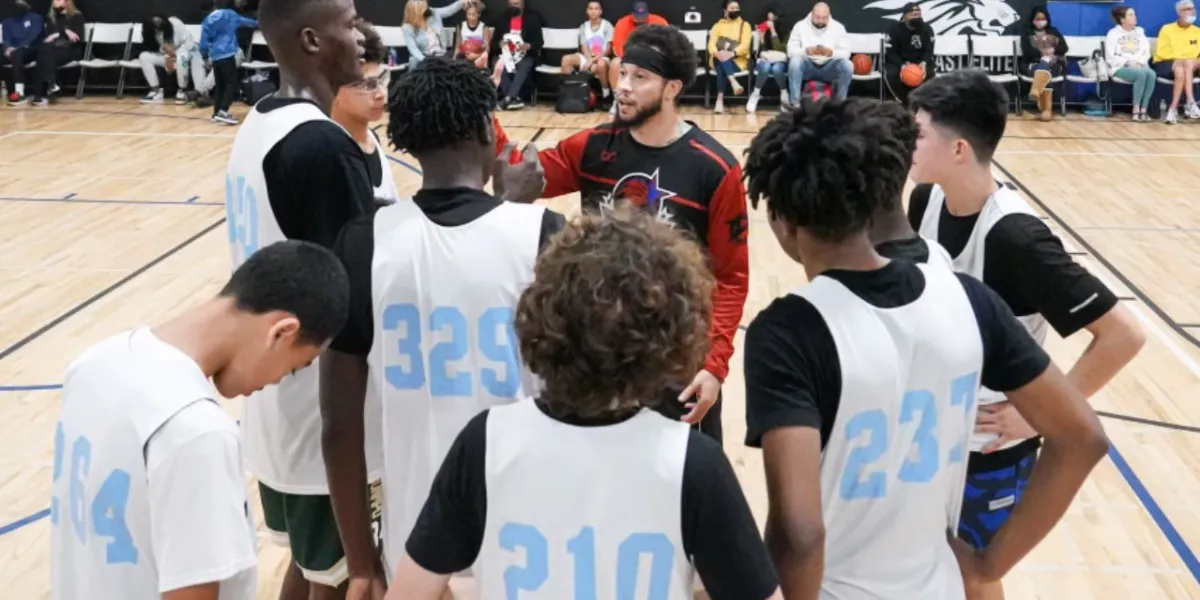
Put five or six players in the same gym and something shifts. Kids compete a little harder when a teammate is watching. They push through a tough conditioning set because nobody wants to be the one who quits first. That kind of peer pressure, the good kind, is almost impossible to manufacture in a one-on-one setting, and it's a big reason group training sticks with younger athletes especially.
Structured, Team-Style Development
Group sessions also mimic what actually happens in games far better than a private session can on its own. Passing lanes, defensive rotations, and reading a live opponent all require other bodies moving on the floor. A skilled coach can simulate pressure one-on-one, but it can't fully replace the organized chaos of multi-player reps. For players trying to translate individual skill into real game performance, that team-style setting does something a private session simply can't reach on its own.
What Personal Training Actually Looks Like on the Court
One-on-One Attention, Every Rep
In a private session, the coach's eyes never leave you. Every dribble, every footwork pattern, every shot gets watched and corrected in real time. There's no waiting in line for a rebound and no sharing reps with seven other kids. If a player has one specific weakness, like a slow first step or a hitch in their shooting motion, personal training lets a coach isolate that exact issue and drill it until it's actually fixed, not just mentioned in passing.
Faster Adjustments, More Repetition
Because the session is built around a single athlete, the pace adjusts constantly. A coach can slow down to rebuild a mechanical issue from scratch, or speed up the moment a player is clearly ready for more. Reps stack up faster too. Instead of splitting sixty minutes eight ways, a player gets the entire hour, which usually means several times the shots, reads, and touches compared to a group session covering the same ground.
Group Training vs Personal Training: Key Differences That Matter
Choosing between group training vs personal training often comes down to timing more than talent. Here's where the two formats actually diverge.
Cost and Time Commitment
Group programs are almost always the more affordable route per session, since the cost of a coach's time gets divided across the group instead of billed to one family. Personal training costs more per hour, but you're paying for concentrated, undivided attention in return. Most structured programs, group or private, run on a longer development cycle rather than a single drop-in class, often six to twelve months, so it's worth reading through the fine print on billing and cancellation before committing to either one.
Pace of Skill Development
When a Faster, Private Pace Helps
A player working through one specific, nagging issue, say ball-handling under pressure or a mechanical flaw in their shot, will usually see it corrected faster with focused, private reps. There's nowhere for the problem to hide when a coach is watching every single attempt.
When Group Pace Is Actually the Better Teacher
A player who's already fairly solid technically but needs game IQ, conditioning, and live competitive reps often develops faster in a group. Skills that only show up under pressure, like decision-making with a defender closing out, need other players on the floor to actually practice.
Energy and Accountability
Group training thrives on energy: teammates, a bit of rivalry, a coach managing several players while keeping the whole session moving. Personal training thrives on focus: no distractions, no comparison to the kid next to you, just one player and one coach working through a plan built around them specifically.
Which Format Fits Your Athlete?
Signs Group Training Is the Right Call
If your athlete is newer to structured training, responds well to a little competition, or needs to build conditioning and game awareness alongside raw skill, group sessions are usually the better starting point. They're also a lower-commitment way to test whether structured coaching is even the right fit before investing in private sessions.
Signs Personal Training Makes More Sense
If there's one specific mechanical issue holding a player back, or if they're already competing at a high level and need detailed, targeted correction, personal training closes that gap faster. It's also a better fit for players who get overwhelmed or distracted in a group setting and need a quieter environment to actually absorb what a coach is teaching.
At Prime Impact Basketball, most of the athletes we work with end up using both formats at different points in their development: group sessions for conditioning, competition, and game reps, private sessions for isolating one specific weakness before it turns into a bad habit. Neither format is objectively better. They solve different problems at different stages.
Making the Decision (and Getting Started)
Rather than guessing from the sideline, the fastest way to figure out which format fits is a short conversation with a coach who can actually watch your athlete move. A quick evaluation tends to surface things a parent can't always see: how a player handles pressure, where their mechanics break down, whether they're ready for the intensity of group competition or need one-on-one time first. Whether you land on group training vs personal training, or a mix of both, the next step is the same. You can book a qualifying call and get matched with the right starting point, or reach out directly if you've got questions before committing to either program.
Group training and personal training aren't really competitors. They're two different tools, and the right one depends on what your athlete needs right now, not what sounds more impressive. Some players thrive on the energy of a full gym. Others need the quiet focus of a coach who's only watching them. Pay attention to how your athlete responds to each setting, stay flexible as their game develops, and remember the format was never really the point. The improvement is.
